Wishlist


How VO2 Max Impacts Stamina, Endurance and Performance
Whether you are hiking up a steep mountain, running a marathon or cycling over long distances, your ability to sustain physical activity depends heavily on your cardiovascular fitness. One of the most important indicators of this fitness is VO2 max, a measurement that reveals how efficiently your body can take in, transport and use oxygen during intense exercise.
For athletes, fitness enthusiasts and outdoor adventurers, understanding VO2 max can provide valuable insights into stamina, endurance and overall physical performance. Improving this measurement through structured training may help you exercise more efficiently, tolerate demanding physical activities and build a stronger aerobic foundation.
What Is VO2 Max and Why Does It Matter?
VO2 max refers to the maximum volume of oxygen your body can use during intense physical activity. It is generally expressed in millilitres of oxygen per kilogram of body weight per minute (mL/kg/min).
During exercise, your lungs absorb oxygen, your heart pumps oxygen-rich blood throughout the body, and your muscles use that oxygen to produce energy. VO2 max reflects the combined efficiency of these processes and is widely recognised as an important indicator of cardiorespiratory fitness.
A higher VO2 max generally indicates a greater capacity to perform aerobic exercise. However, it is not the only factor determining athletic performance. Muscular strength, exercise economy, lactate threshold, nutrition and mental resilience also contribute to endurance.
How VO2 Max Influences Stamina and Endurance
Stamina refers to your ability to sustain physical activity without becoming excessively fatigued, while endurance describes your capacity to maintain exercise over an extended period.
VO2 max plays an important role in both because oxygen is essential for aerobic energy production. When your cardiovascular system can deliver more oxygen to working muscles, your body has a greater capacity to support sustained physical effort.
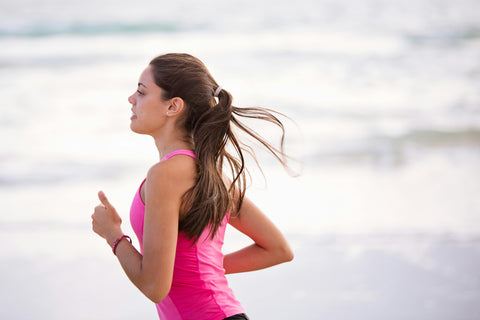
This can be particularly beneficial during activities such as hiking, swimming, running and cycling. Individuals with better aerobic fitness may find it easier to maintain a consistent pace, tackle longer distances and recover between demanding periods of exercise.
However, two people with similar VO2 max values can have very different endurance performances. This is because factors such as lactate threshold and movement efficiency influence how much of their aerobic capacity they can sustain.

The Relationship Between VO2 Max and Athletic Performance
VO2 max is particularly relevant to sports that require prolonged aerobic activity. Distance runners, cyclists, mountaineers and competitive swimmers all rely on efficient oxygen utilisation to maintain performance.
A higher VO2 max can provide a larger aerobic capacity, allowing athletes to perform demanding activities at higher absolute intensities. It can also provide additional physiological reserve during challenging sections of exercise, such as steep climbs or sustained uphill efforts.
Martin Burtscher, MD, PhD, a researcher in mountain and altitude physiology at the University of Innsbruck, highlights the importance of aerobic fitness for mountaineering: "Thus, basic individual performance (at low altitude) becomes particularly important."
His research emphasises that a strong aerobic foundation is especially important when preparing for physically demanding high-altitude adventures.
Why Altitude Makes VO2 Max Even More Important
For hikers and mountaineers, oxygen availability becomes increasingly important as elevation increases. At higher altitudes, atmospheric pressure decreases, meaning less oxygen is available with each breath. Consequently, the body's ability to transport and utilise oxygen becomes more limited.
A review by Guido Ferretti and Giacomo Strapazzon, published in The Journal of Physiology, examined changes in maximal oxygen consumption and exercise capacity at altitude, drawing on physiological evidence from historic Mount Everest expeditions.
The researchers explained that oxygen transport becomes increasingly restricted at extreme elevations. They also noted that: "There is no need for a very high VO2max at sea level to climb the highest peaks on Earth."
This observation from Guido Ferretti, Professor of Physiology and an expert in respiratory and exercise physiology, highlights an important distinction: a high VO2 max can be beneficial, but successful mountaineering also depends on acclimatisation, pacing, technical ability and individual physiological adaptation.
How to Improve Your VO2 Max Through Training
The good news is that aerobic fitness can improve with consistent, structured exercise. If you are wondering how to improve VO2 max, combining different training intensities can help develop your cardiovascular capacity.
Consider incorporating the following activities into your weekly routine:
-
Interval training: Alternate short periods of high-intensity exercise with recovery periods to challenge your cardiovascular system.
-
Steady-state cardio: Include running, cycling, swimming or brisk walking at a moderate intensity to develop aerobic endurance.
-
Hill training: Walking or running uphill helps build cardiovascular fitness while strengthening the muscles used during climbing.
-
Long-distance sessions: Gradually increase the duration of your workouts to improve your ability to sustain physical activity.
An effective VO2 max training programme should balance challenging workouts with adequate recovery. Beginners should increase exercise intensity gradually and consider professional guidance before introducing demanding intervals.

Practical Ways to Build Better Hiking Endurance
Improving hiking endurance requires more than cardiovascular conditioning. Hiking involves carrying additional weight, navigating uneven terrain and managing repeated changes in elevation.
Developing aerobic fitness for hiking means combining cardiovascular exercise with strength training and activity-specific preparation. Exercises such as step-ups, squats, lunges and weighted walks can help prepare your legs for demanding trails.
Consistency is more important than occasional intense workouts. Gradually increasing walking distances, practising uphill climbs and allowing sufficient recovery can help build the physical capacity needed for longer outdoor adventures.
Build Your Aerobic Engine for Every Adventure
VO2 max provides valuable insight into cardiovascular fitness and the body's ability to sustain physical activity. From improving running stamina to tackling challenging mountain trails, a stronger aerobic foundation can support better endurance and overall exercise performance.
However, VO2 max is only one piece of the fitness puzzle. Combining structured cardiovascular exercise, strength training, proper nutrition and sufficient recovery can help you become a stronger, more capable athlete.
Ultimately, improving your aerobic capacity is not just about achieving a higher fitness score. It is about having the stamina, confidence and physical resilience to enjoy more demanding adventures.
About the Author
Cody Martinez
Cody is a burgeoning freelance writer based in the Pacific Northwest, originally hailing from New Mexico. After years navigating the corporate world, he took a leap of faith to pursue his passion for outdoor adventures and storytelling. Drawing from his diverse heritage and experiences, Cody explores the beauty of nature and shares insights on outdoor gear, travel, and sustainability.